Natural Fertilizer for Petunias: 6 Options That Really Work
Written By Potifya, a small-space gardening guide for balconies, pots and apartments· Published October 21, 2026
Plus why coffee grounds fall short, and the iron problem most gardeners miss.
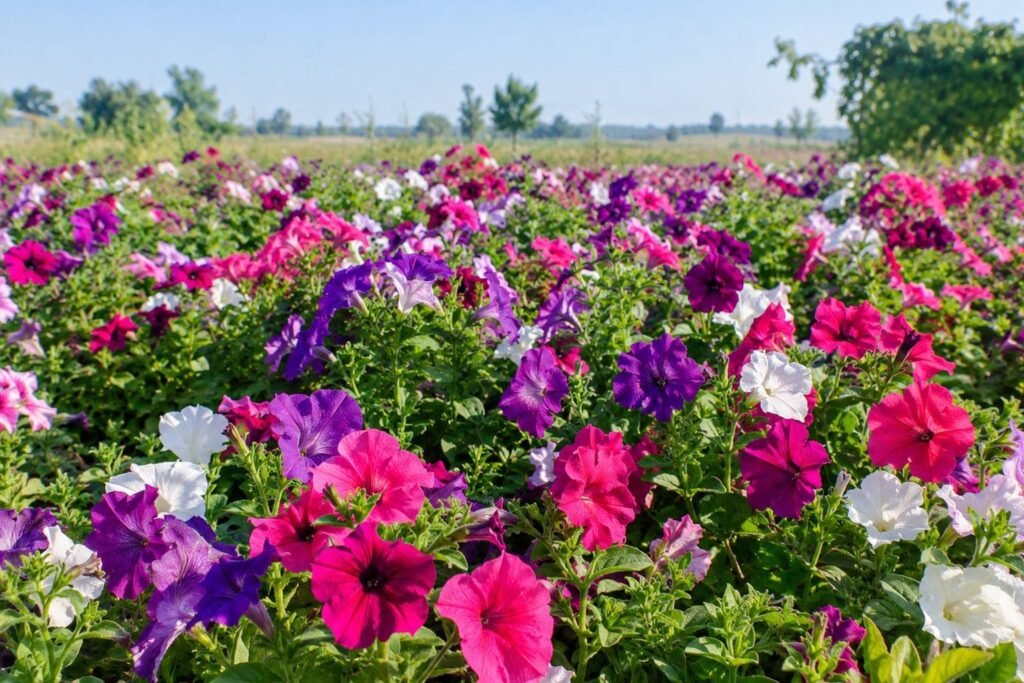
Petunias can bloom nonstop from spring until frost, but that kind of performance burns through nutrients fast. A hanging basket that looked spectacular in May can turn pale and leggy by July if it isn’t fed. The good news is that you don’t need harsh synthetic products to keep petunias flowering. A few natural fertilizers (worm castings, compost tea, fish emulsion, and some helpers) will do the job when you use them on the right schedule.
This guide explains what each option does, how to use it, and how to build a simple feeding routine. It also covers the one issue most guides skip: petunias are unusually prone to iron deficiency, and no amount of fertilizer will fix it if your soil pH is off.
Quick answer: Mix worm castings or compost into the soil at planting (and bone meal into garden beds), then feed a natural liquid fertilizer such as compost tea or fish emulsion about once a week in pots and baskets, or every two weeks in garden beds. If the newest leaves turn yellow while the veins stay green, check your pH and add chelated iron instead of more fertilizer.
Why Petunias Need So Much Food
Petunias are heavy feeders. Each plant produces dozens of flowers over a long season, and container plants are hungrier still, because every watering rinses some nutrients out through the drainage holes. Bagged potting mix usually holds only enough starter nutrition for the first few weeks, so after that the plant depends on you.
Natural fertilizers tend to feed more gently than synthetic ones, and many also improve the soil itself, which lowers the risk of burning roots. The trade-off is consistency: small, regular feedings beat an occasional heavy dose every time.
The 6 Best Natural Fertilizers for Petunias
1. Worm Castings: Gentle, Slow Background Feeding
Worm castings are among the safest fertilizers you can use because they are very hard to overdo. They add a modest amount of nutrients along with beneficial microbes and organic matter that help potting mix hold moisture.
- Best for: Blending into potting mix, topping off containers, and giving new plants a steady start.
- How to use: Mix castings into potting soil at roughly 10–20% by volume, or spread a thin layer over the surface and water it in.
- Worm tea option: Steep a handful of castings in a mesh bag in dechlorinated or rain water for 24–48 hours, then use the liquid to water your plants.
- Keep in mind: Castings are mild. In peak summer, pair them with a liquid feed.
2. Compost Tea: The Weekly Liquid Feed
Compost tea delivers nutrients in a form plants can use right away, without the intensity of a concentrated fertilizer.
- How to make it: Put finished compost in a cheesecloth or burlap bag and steep it in a bucket of water. Add a spoonful of molasses to feed the microbes and run an aquarium air stone to keep the water oxygenated. Brew for about 24–48 hours.
- Shortcut: If you keep a worm bin, the liquid that drains from it works well when diluted with water. Bokashi leachate is much stronger and more acidic, so dilute it heavily, to roughly 1 part in 100.
- How often: Weekly in pots and hanging baskets, every two weeks in garden beds.
- Tip: Use it fresh. Compost tea is a living mixture and does not store well.
3. Fish Emulsion: The Easy Ready-Made Option
If brewing tea sounds like too much work, fish emulsion is the simple store-bought alternative. Many popular products sit around 2-4-1 on the N-P-K scale, which means nitrogen for leafy growth plus smaller amounts of phosphorus and potassium.
- How to use: Dilute it according to the label and apply to moist soil every one to two weeks (weekly for baskets).
- Fish and seaweed blends: These add trace minerals and are a popular organic liquid choice.
- Heads-up: The smell is strong at first but fades quickly. Water it into the soil rather than splashing it on foliage, and don’t apply it to bone-dry soil.
4. Bone Meal: A Planting-Day Booster
Bone meal is rich in phosphorus (many products are around 3-15-0), which supports strong root development. That makes it most useful on planting day.
- How to use: Work the recommended amount into the planting hole or the top layer of garden soil before planting. Never exceed the label rate.
- Limits: It releases slowly and contains no potassium, so it can’t carry petunias through a whole season. Follow it with a liquid feed once flowering begins.
- Heads-up: The smell can attract digging animals, so cover it well with soil. If a soil test shows you already have plenty of phosphorus, skip it.
5. Liquid Seaweed (Kelp): Trace-Mineral Support
Kelp and seaweed extracts supply small amounts of potassium and a wide range of trace minerals. They are not a complete fertilizer on their own, but they make a useful supplement alongside compost tea or fish emulsion, especially in potting mix that has run low on micronutrients. Use at the label rate, usually mixed in with your regular liquid feeding.
6. Epsom Salt: Only When Magnesium Is the Problem
Epsom salt (magnesium sulfate) gets recommended for almost everything, but it is not a general fertilizer. It helps only when plants are short on magnesium, which typically shows up as yellowing between the veins of older, lower leaves.
- How to use: Dissolve 1 tablespoon in 1 gallon of water and use it to water plants about once a month.
- If your petunias look healthy, skip it. Extra salts can build up in containers.
What About Coffee Grounds?
Coffee grounds are the first thing many gardeners reach for, but they are a weak choice for petunias. Used grounds contain only about 2% nitrogen and very little phosphorus or potassium (Almanac). They are also not very acidic: Oregon State University Extension Master Gardeners note that used grounds land close to neutral, around pH 6.5–6.8 (source), so they won’t reliably lower pH either.
Raw grounds can also pack down on the surface, temporarily tie up nitrogen as they break down, and add soluble salts to potted plants (Ask Extension). The better move is to compost them first or add them to compost tea. Coffee grounds are a fine ingredient for your compost pile, just not a petunia fertilizer on their own.
The Step Most Guides Miss: Iron and Soil pH
Here is where many petunia growers get stuck. You’re feeding on schedule, yet the newest leaves at the stem tips turn pale yellow while the veins stay green. That pattern, called interveinal chlorosis, is the classic sign of iron deficiency, and petunias are especially prone to it. Extension programs list petunias and close relatives such as calibrachoa, verbena, and pansies as “iron-inefficient” plants, meaning they struggle to absorb iron when the growing medium isn’t acidic enough (SDSU Extension, Oklahoma State Extension).
The cause is usually pH rather than a shortage of iron. When potting mix or soil drifts too high, iron becomes locked up even if plenty is present. For petunias in containers, extension guidance puts the ideal range at roughly 5.5 to 6.2. Potting mixes vary from bag to bag, and hard or alkaline tap water can push pH upward over time.
What to do:
- Test first. Inexpensive pH strips or a meter will tell you whether pH is the culprit before you add anything.
- Correct the root cause. For containers, a fresh, good-quality potting mix is often the simplest fix. For garden beds, run a soil test and follow your local extension office’s recommendations rather than guessing with kitchen remedies.
- Add chelated iron. Chelated iron corrects the deficiency while you sort out pH. Michigan State University Extension notes that iron EDDHA stays available at higher pH than other forms, so it’s the better choice if your mix is alkaline (MSU Extension). Follow the label closely, because concentrated iron can leave brown or black spots on leaves (UConn Extension).
- Keep feeding naturally. Compost tea and fish emulsion supply some micronutrients, but they can’t overcome a pH problem on their own.
A Simple Natural Feeding Schedule
- Planting day: Use fresh potting mix blended with compost or worm castings. In garden beds, mix compost into the soil and add bone meal to the planting hole at the label rate.
- First 1–2 weeks: Water well but hold off on liquid feeding while the roots settle in.
- Establishment through peak bloom: Feed containers and hanging baskets weekly with compost tea or diluted fish emulsion. Feed garden beds every two weeks. Spreading varieties are the hungriest.
- Midsummer refresh: If plants turn leggy and flowering slows, trim stems back by about a third, top-dress with a little worm castings, and resume feeding. Fresh growth and new flowers typically follow within a few weeks.
- Fall: In frost-free climates petunias often keep blooming, so continue feeding but less often as days shorten and growth slows. Where frost is coming, stop feeding once cold weather arrives.
Always water the plant before or along with fertilizer. Feeding dry soil is one of the quickest ways to burn roots.
Pots vs. Garden Beds
Container petunias need the most attention. The small volume of soil holds limited nutrients, and frequent watering flushes them out, so hanging baskets and pots benefit from weekly feeding. Petunias in the ground have more soil to draw from and respond well to compost worked in before planting, plus a lighter every-other-week liquid feed. If your petunias are crowding out neighboring plants, stretch the interval or skip a feeding.
Signs You’re Feeding Too Little or Too Much
Underfed petunias:
- Pale green or yellowing older leaves
- Fewer, smaller flowers and long, leggy stems
- Newest leaves yellow with green veins (check iron and pH, not just fertilizer)
Overfed petunias:
- Brown, crispy leaf edges or tips
- A white crust on the soil surface or pot rim
- Lots of leaves but few flowers
- Wilting even though the soil is moist
If you suspect over-fertilizing, flush the container by watering slowly until water drains freely several times, hold off feeding for two to three weeks, then resume at a gentler dilution.
Common Mistakes to Avoid
- Feeding dry plants. Always water first.
- Relying only on coffee grounds, banana peels, or eggshells. These contribute very little nutrition within a single season.
- Skipping the pH check when leaves turn yellow.
- Using stale compost tea. Brew it fresh and use it soon.
- Forgetting to deadhead. Many classic petunias put energy into seed instead of new flowers unless you pinch off spent blooms, though many modern spreading types need little or no deadheading.
Final Thoughts
Keeping petunias in constant bloom comes down to three habits: feed small amounts regularly, use gentle natural fertilizers such as worm castings, compost tea, and fish emulsion, and watch for the iron and pH signals that no fertilizer can fix by itself. Start with healthy potting mix on planting day, feed weekly, and trim back in midsummer for a second flush of flowers.
Want more help keeping your plants healthy? Browse our Organic Gardening and Plant Problems & Solutions guides.
Frequently Asked Questions
Quick answers about feeding petunias with natural fertilizers.
Weekly for pots and hanging baskets and every two weeks for plants in the ground is a reliable starting point. Stretch the interval if growth gets out of hand, and feed less often when cool weather slows growth.
Compost tea or worm tea is the best all-around homemade option because it’s gentle and can be used regularly. If the problem is yellow new leaves with green veins, though, no homemade tea will fix a pH or iron issue. Use chelated iron and correct the pH.
Not on their own. Used grounds are only about 2% nitrogen, close to neutral in pH, and can cause problems in pots. Compost them first or add them to compost tea.
The pattern matters. Yellow new leaves with green veins point to iron deficiency from high pH. Yellowing older leaves can mean low nitrogen or magnesium. Yellowing with soggy soil suggests overwatering or poor drainage, and brown edges with a white crust suggest too much fertilizer.
Only if the plants show signs of magnesium deficiency, such as yellowing between the veins of older leaves. Use 1 tablespoon per gallon of water about once a month, and skip it otherwise.
Yes, when it’s diluted according to the label and applied to moist soil. Water it in thoroughly, and apply it in the morning or evening rather than at midday.
It can. Concentrated fish emulsion or compost tea applied too strongly or too often can stress roots and build up salts in containers. Always dilute, water first, and follow label rates.
In frost-free areas where petunias keep blooming, feed lightly and less often as growth slows. Where frost is expected, stop feeding once cold weather arrives.