Can Mint Grow on a Balcony Without Direct Sunlight? A Practical Guide
Written by By Potifya, a small-space gardening guide for balconies, pots and apartments.· Published Aug 15, 2026 · Updated Oct 17, 2026
Yes, mint can grow on a balcony without direct sunlight, as long as it gets bright indirect light or about 3–4 hours of gentle sun a day. With no natural light at all, mint will survive for a while but turns weak and leggy, so it needs a grow light for roughly 12–14 hours a day.
Mint is one of the most forgiving herbs for a shaded balcony. This guide shows how much light it really needs, where to put the pot, how to plant it, and what to do when your balcony is too dark.
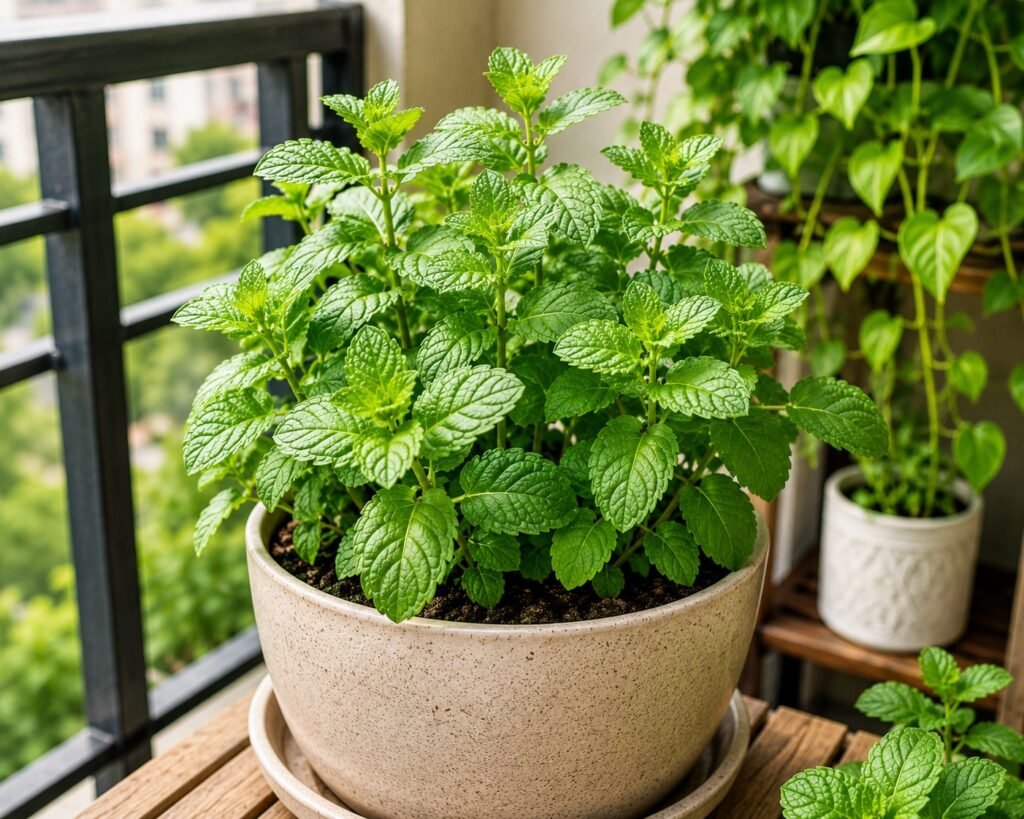
How Much Light Does Mint Actually Need?
Mint grows best in full sun, but it is one of the few herbs that copes well with shade. What matters is how much usable light your balcony gets, not just whether the sun hits it directly.
| Light level | What it means on a balcony | What to expect from mint |
|---|---|---|
| Full sun | 6–8 hours of direct sun | Fast, dense growth, but it dries out quickly and can scorch in strong heat |
| Partial shade | About 2–5 hours of direct sun | Good growth and tender leaves; the best balance for most balconies |
| Bright shade | No direct sun, but the space feels bright most of the day | Slower growth, still productive with regular trimming |
| Deep shade | Walls or roofs block most daylight and the space feels dim | Weak, pale, leggy growth; needs a grow light |
| No light | Windowless or fully enclosed | Will not thrive without a grow light |
Short answer: aim for at least 3–4 hours of direct sun or a clearly bright spot. If your balcony feels dim at midday, treat it as deep shade and plan on a grow light.r beginners because it can tolerate partial shade and indirect light better than many other herbs.
A quick way to check your balcony’s light
Look at your balcony at three times of day: morning, noon and late afternoon. Note whether sun reaches the pot and for how long. A spot that stays bright to the eye without direct sun is bright shade. If you have to turn on a lamp to read there in daytime, it is deep shade.
Where to Put Mint on a Shaded Balcony
- Rotate the pot every week or two so all sides get light and the plant doesn’t lean.
- Near the railing or outer edge. This is usually the brightest part of a balcony.
- Where it catches reflected light. A white wall or a light-colored surface opposite the pot bounces extra light onto the leaves.
- Away from dark corners and deep overhangs. A covered corner can be much dimmer than it looks.
- Out of harsh afternoon sun in summer. In very hot weather, partial shade is better than strong direct sun, which dries the pot fast and can scorch leaves.
What If Your Balcony Gets Almost No Light?
If your balcony is in deep shade, you have two options.
- Move the pot to the brightest spot you have, even if that means the railing edge or a spot near a bright window indoors.
- Add a grow light. A full-spectrum LED grow bulb or small LED panel is enough for mint. It doesn’t need a powerful setup.
How to use a grow light for mint
- Use a full-spectrum LED grow bulb or panel. A regular household lamp won’t do the job.
- Keep the light on for about 12–14 hours a day. A cheap plug-in timer makes this easy.
- Place the light close to the plant, a few inches to about a foot above the leaves, depending on the strength of the bulb. If the leaves look bleached, raise it.
- Rotate the pot so the plant grows evenly rather than stretching to one side.
- Water a little less often than you would in sun, because soil dries more slowly under weaker light.
When mint won’t work
If the spot is fully enclosed and dark, and you don’t want to use a grow light, mint is a poor fit. In that case, consider moving it indoors to a bright windowsill or choosing another shade-tolerant plant.
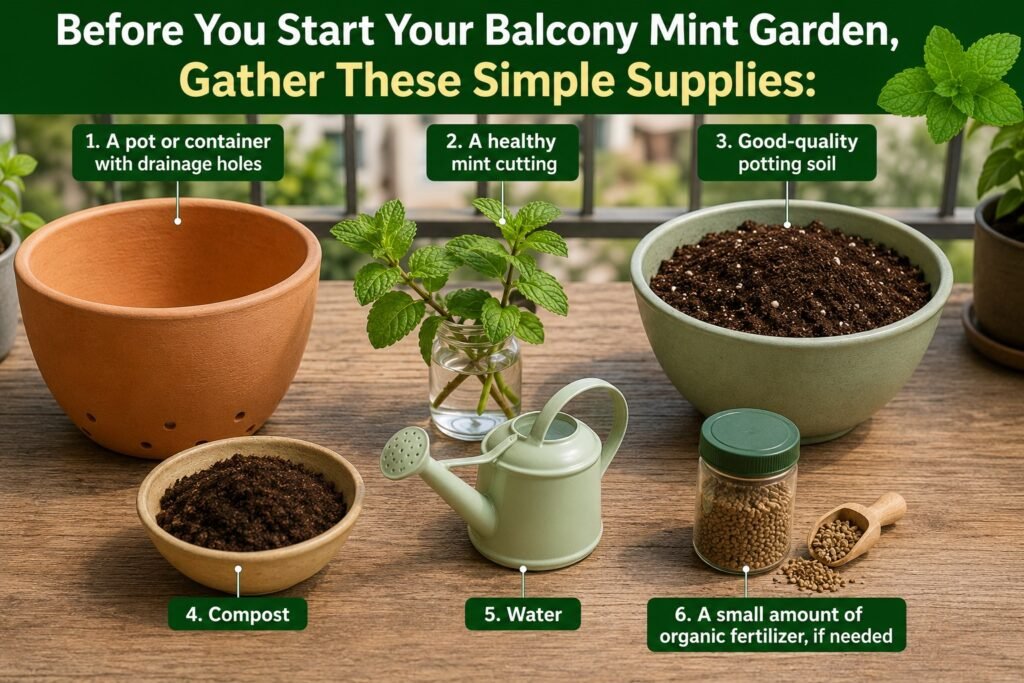
What You Need to Grow Mint in a Pot
- A pot at least 8–10 inches wide and deep, with drainage holes
- A healthy mint cutting or a small nursery plant
- Well-draining potting mix, plus a handful of compost
- A little sand or perlite to improve drainage
- Water
- Optional: a diluted liquid fertilizer
A wider pot is better than a tall one, because mint spreads through its roots. Always keep mint in its own container. In a shared planter it will crowd out its neighbors.
How to Plant Mint, Step by Step
Step 1: Get a healthy cutting
Take a stem about 4–6 inches long with several healthy green leaves. You can get one from a nursery plant, a friend’s plant, or fresh mint from the kitchen. Avoid stems that look damaged, diseased or very weak.
Step 2: Root it in water or plant it directly
- Rooting in water: Strip the lower leaves and stand the stem in a glass of water in bright indirect light. White roots usually appear within a week or two. Plant it once the roots are an inch or two long.
- Planting directly: Strip the lower leaves, push the stem into moist soil, and press the soil around it. Keep the soil lightly moist while it roots.
Step 3: Prepare the pot and soil
Fill the pot with well-draining potting mix blended with some compost and a little sand or perlite. Garden soil on its own tends to compact in pots and drain poorly, so it is better not to use it as the main ingredient. The goal is soil that holds some moisture but lets excess water run out.
Step 4: Plant and water
Make a small hole, place the stem or rooted cutting in it, and gently firm the soil. Water well and let the excess drain out of the bottom.
Step 5: Place it in the brightest spot you have
Use the placement tips above. Early on, keep it out of strong afternoon sun while the cutting establishes.
Step 6: Water by feel, not by schedule
Mint likes evenly moist soil, but not soggy soil. Push a finger into the top inch of soil. If it feels dry, water thoroughly until water drains out. In shade, soil dries more slowly than in sun, so this may mean every 2–3 days instead of daily. In hot summer weather, you may need to water more often.
Step 7: Feed lightly
Mint doesn’t need heavy feeding. Mix a little compost into the soil now and then, or use a diluted balanced liquid fertilizer about once a month. Too much fertilizer can reduce flavor.
Step 8: Harvest and trim
Once the plant is established, usually around 3–4 weeks after planting a rooted cutting, start harvesting.
- Cut stems just above a leaf node using clean scissors.
- Take the top third or so, never the whole plant.
- Harvest regularly. Trimming makes mint bushier and keeps it from getting leggy.
- Pinch off flower buds if they appear, so the plant keeps putting energy into leaves.
Signs Your Mint Isn’t Getting Enough Light
| What you see | Likely cause | Fix |
|---|---|---|
| Long, thin, stretched stems with gaps between leaves | Too little light | Move to a brighter spot or add a grow light; trim back |
| Pale or light green leaves | Low light or poor feeding | Increase light; feed lightly |
| Small leaves and slow growth | Low light, a small pot, or poor soil | Brighter spot, larger pot, a little compost |
| Weak flavor | Weak, stretched growth | More light, regular trimming |
| Yellow leaves | Overwatering or poor drainage | Check drainage holes; water only when the top inch is dry |
| Dry, crispy or wilting leaves | Heat or under-watering | Move out of harsh afternoon sun; check soil moisture |
Common Problems and Quick Fixes
Yellow leaves. Usually too much water or poor drainage. Check the soil and the drainage holes before watering again.
Slow growth. Usually low light or tired soil. Move the pot to a brighter place and add a little compost.
Dry or wilting leaves. The plant may need water or may be too hot. Check the soil and shift it out of harsh afternoon light.
Insects. Check the leaves and the undersides regularly. For a mild infestation, spray the plant with a mix of water and a few drops of mild liquid soap or a neem-based spray, following the product label, and rinse the leaves afterward.
Tips for Healthy Mint on a Small Balcony
- Keep mint in its own wide, well-drained pot.
- Give it the brightest spot available and rotate the pot regularly.
- Water when the top inch of soil is dry rather than on a fixed schedule.
- Trim often to stay bushy.
- Protect it from extreme afternoon heat.
- Use a grow light if your balcony is dim.
- Don’t crowd several plants into one small pot.
Final Thoughts
You don’t need a sunny garden to grow mint. A bright, shaded balcony with a good pot, well-draining soil and sensible watering is enough, and a small grow light covers the gap if your space is very dim. Start with one pot, check the light, trim regularly, and you’ll have fresh mint for tea, drinks and cooking.
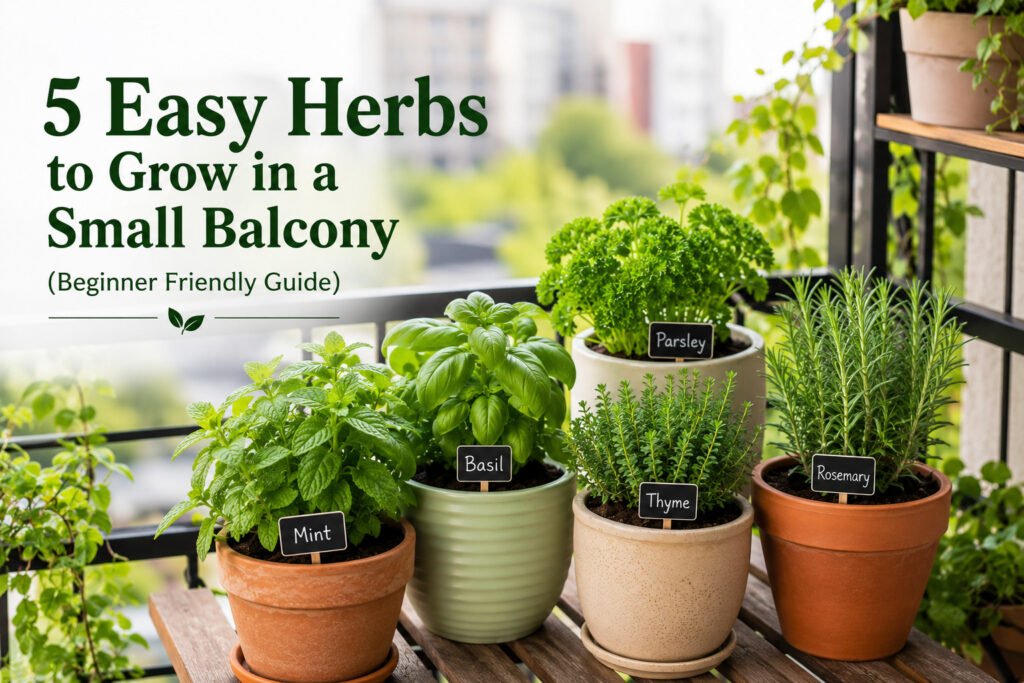
Looking for more plants that suit a small balcony? See our guide to 5 easy herbs to grow in a small balcony, or browse all gardening guides.
Frequently Asked Questions
Can mint really grow without direct sunlight?
Yes, but not without any light. Mint tolerates shade well and does fine in bright indirect light or with about 3–4 hours of gentle sun. In a deeply shaded or windowless space it needs a grow light.
Can mint grow with no sunlight at all?
Only with artificial light. Under a full-spectrum LED grow light running about 12–14 hours a day, mint can grow indoors with no natural sun. Without any light source it will weaken and die.
How many hours of sun does mint need?
Mint grows best with 6–8 hours of direct sun, but it also grows well in partial shade with roughly 2–5 hours. On a shaded balcony, 3–4 hours of gentle sun or a bright spot is a good target.
Does mint need direct sunlight?
No. It does well in bright indirect light and partial shade, and in very hot climates it often prefers some afternoon relief from direct sun.
Where is the best spot for mint on a shaded balcony?
Choose the brightest spot you have, such as near the railing, in a spot that catches reflected light, or in a corner that gets some sun for part of the day. Avoid enclosed, dim corners.
What size pot should I use for mint?
A pot at least 8–10 inches wide and deep, with drainage holes. Mint spreads by runners, so a wider pot gives it room to grow.
How often should I water mint in low light?
Check the top inch of soil. Water when it feels dry. In low light, that is often every 2–3 days rather than daily, but it varies with pot size, weather and soil.
What is the best soil for balcony mint?
A well-draining potting mix blended with compost, plus a little sand or perlite. Good drainage prevents root rot, which is the biggest risk when growing in slower-drying shade.
Why are my mint leaves small, pale or leggy?
Usually too little light. Move the pot to a brighter spot, rotate it regularly, trim the stretched stems, and add a grow light if the space is dim.
Does mint need fertilizer?
Only lightly. Compost now and then, or a diluted balanced liquid fertilizer about once a month, is enough. Too much fertilizer can reduce flavor.
How do I harvest mint without killing the plant?
Snip stems just above a leaf node and take no more than about a third of the plant at a time. Regular trimming encourages bushier growth.
Can I grow mint indoors if my balcony is too shaded?
Yes. Put it on a bright windowsill, ideally a south-facing one, or under a grow light. East- and west-facing windows also work if they are bright.
How do I stop mint from taking over other pots?
Grow it in its own container, and don’t let its runners root into neighboring pots. Trimming regularly keeps it in check.