How to Grow Sweet Potatoes Indoors at Home: An Easy Indoor Guide for Year-Round Harvests
Growing sweet potatoes at home may sound like something that requires a large garden, but you can actually grow them in containers—even indoors. With a suitable container, warm conditions, enough light, and a little patience, you can produce your own sweet potato roots in a surprisingly small space.
Sweet potatoes are warm-season plants that grow from slips, which are shoots produced from a mature sweet potato. They need plenty of light and room for their roots to develop. Most varieties take roughly 90–120 days from planting slips to harvest, so growing indoors can help you extend the growing season and start new plants when outdoor conditions are unsuitable.

In this guide, you’ll learn how to grow sweet potatoes indoors, how to start slips, choose the right container, provide proper lighting, water the plant, and harvest your homegrown sweet potatoes.
Can You Grow Sweet Potatoes Indoors?
Yes, sweet potatoes can be grown indoors in containers, but there is an important difference between growing the attractive vines and growing large edible roots.
Sweet potatoes naturally produce long, spreading vines, and the edible portion develops underground as enlarged storage roots. For a good root harvest, the plant needs a sufficiently large container filled with loose, well-draining growing media.
Compact or bush-type varieties are particularly useful when space is limited. Varieties such as Porto Rico and Vardaman are suitable for containers and have more compact growth than many spreading varieties.
Step 1: Start With a Healthy Sweet Potato Slip
Unlike regular potatoes, sweet potatoes are generally grown from slips rather than pieces of the root.
A slip is a young shoot that develops from a mature sweet potato.
You can purchase disease-free slips or produce your own at home.
To make your own slips:
- Choose a healthy, mature sweet potato.
- Place it partly into moist potting soil or sand.
- Keep the growing medium warm and moist, but never waterlogged.
- Place it somewhere warm with good light.
- Allow shoots to develop.
- Once the shoots are sufficiently developed, carefully separate them from the sweet potato.
- Plant the slips into your container.
We recommends starting slips in warm conditions, around 75°F (24°C), while Illinois Extension recommends keeping the propagation medium around 70–80°F (21–27°C).
A Tip About the Water Method
You may have seen the popular method of suspending a sweet potato in a glass of water with toothpicks.
Although this can produce sprouts, it isn’t necessarily the best method for producing healthy planting material. Penn State Extension notes that growing slips by suspending the sweet potato in water carries a greater risk of rot.
For a more reliable approach, use moist soil or sand and avoid keeping the sweet potato constantly submerged.
Step 2: Choose the Right Container for Sweet Potatoes
Choosing the right container is one of the most important parts of growing sweet potatoes indoors.
Sweet potato roots need room to develop, while the vines can become quite large.
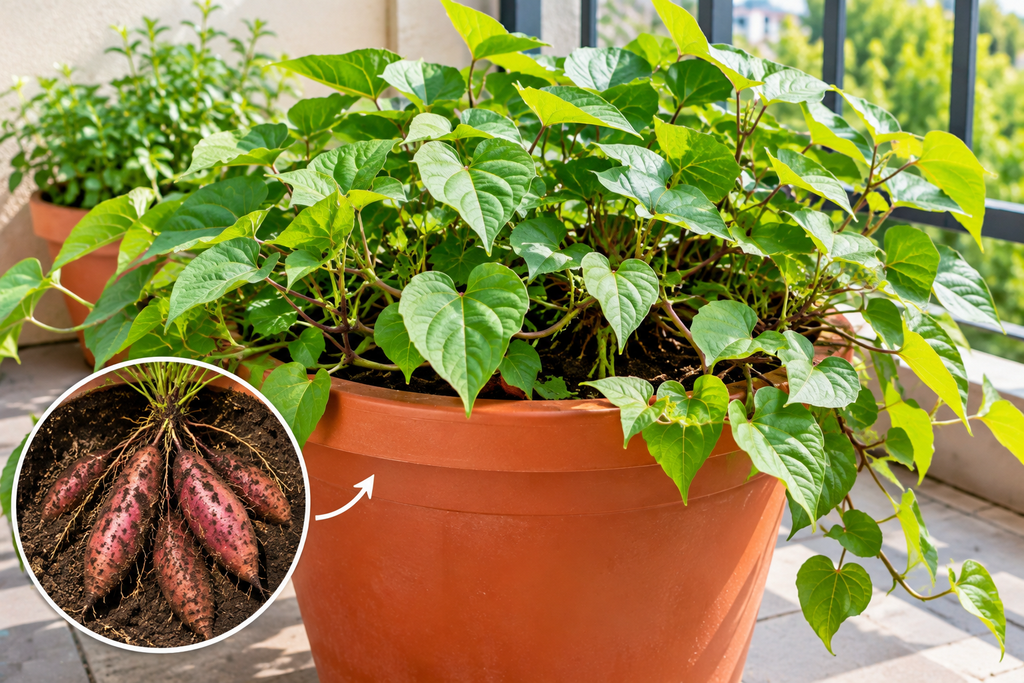
Choose a large, sturdy container with drainage holes. A deep grow bag, large plastic container, or substantial gardening pot can work well.
The container should:
- Have several drainage holes
- Be deep enough for developing storage roots
- Be wide enough for the plant’s root system
- Be sturdy enough to support the growing vines
- Be easy to move if necessary
Containers also allow you to move the plant toward better light or away from temperature extremes.
If you’re growing on a balcony or near a window, choose a stable container because large plants can become top-heavy.
Step 3: Use Loose, Well-Draining Soil
Sweet potatoes prefer loose, well-drained growing media.
Avoid filling the container with heavy, compacted garden soil. Dense or waterlogged soil can interfere with root development and increase the risk of rot.
A quality vegetable potting mix is a good starting point. You can improve it with mature compost while maintaining good drainage.
The goal is to create growing media that is:
- Loose
- Well-draining
- Moisture-retentive but not soggy
- Rich enough to support healthy growth
Be careful with excessive nitrogen. Too much nitrogen can encourage lots of leafy vine growth without producing as many storage roots.
Step 4: Give Your Indoor Sweet Potato Plenty of Light
Light is one of the biggest challenges when growing sweet potatoes indoors.
Place your container near a bright, sunny window where the plant can receive strong direct light.
If natural sunlight is insufficient, use a suitable LED grow light.
Indoor plants generally receive much less light than plants growing outdoors, so a bright window alone may not always provide enough intensity for vigorous growth. Light is one of the most limiting factors for indoor plant growth and that supplemental lighting can be useful.
A grow light can be especially useful during winter or in rooms with limited direct sunlight.
Step 5: Keep the Plant Warm
Sweet potatoes are warm-loving plants and perform poorly in cold conditions.
For indoor growing, keep the plant in a warm location away from cold drafts, very cold windows, and sudden temperature changes.
Warm conditions are particularly important when starting slips. Sweet potatoes are sensitive to cool soil, and root development is favored by warm growing conditions.
This is one reason indoor growing can be useful: you can maintain a more consistent environment than you might have outdoors during cooler months.
Step 6: Water Your Sweet Potato Correctly
Sweet potatoes need consistent moisture while they are establishing and actively growing, but the soil should not remain constantly saturated.
Check the growing medium regularly. If the upper layer begins to dry, water thoroughly until excess water drains from the bottom.
Always make sure the drainage holes are not blocked.
Container plants generally dry out faster than plants growing in the ground, so indoor sweet potatoes may need more frequent monitoring.
Avoid leaving the container sitting in a tray of standing water.
Step 7: Give the Vines Enough Space
One of the biggest surprises for new growers is how much space sweet potato vines can occupy.
Many varieties produce long trailing vines, and some can reach many feet in length. Penn State notes that some sweet potato vines can reach 20 feet, while compact varieties are much easier to manage in containers.
You can allow the vines to trail from a shelf or container, or gently guide them around a support.
If you’re growing indoors primarily for the roots, avoid constantly cutting back the main vine just to keep it small. Instead, choose a compact variety from the beginning if space is limited.
How Long Does It Take to Grow Sweet Potatoes Indoors?
Sweet potatoes generally need about 90–120 days after planting slips to reach maturity, although the exact timing depends on variety and growing conditions.
This means indoor growing doesn’t provide instant sweet potatoes. You’ll need patience.
The advantage is that indoor conditions can allow you to start plants outside the traditional outdoor growing season.
For a continuous supply, you can start new slips at different times rather than planting everything on the same day.
How to Harvest Sweet Potatoes From a Container
When the plant has had sufficient time to mature, you can harvest the roots.
Begin by gently removing some of the growing medium around the plant and locating the storage roots. Because sweet potatoes bruise easily, avoid cutting or digging aggressively.
Once you’ve harvested the roots, handle them carefully.
Don’t worry if the roots aren’t all the same size. Homegrown sweet potatoes can vary considerably in size depending on the variety and growing conditions.
Don’t Skip the Curing Process
Freshly harvested sweet potatoes benefit from curing before long-term storage.
Curing allows the roots to heal minor harvest injuries, improves skin quality, and helps develop their characteristic sweetness. Penn State recommends warm, humid conditions for curing, followed by cooler storage.
For home gardeners, proper curing can make a noticeable difference in how well harvested sweet potatoes store and taste.
How to Get Sweet Potatoes Year-Round
The phrase “year-round harvest” doesn’t mean one plant will continuously produce mature sweet potatoes throughout the entire year.
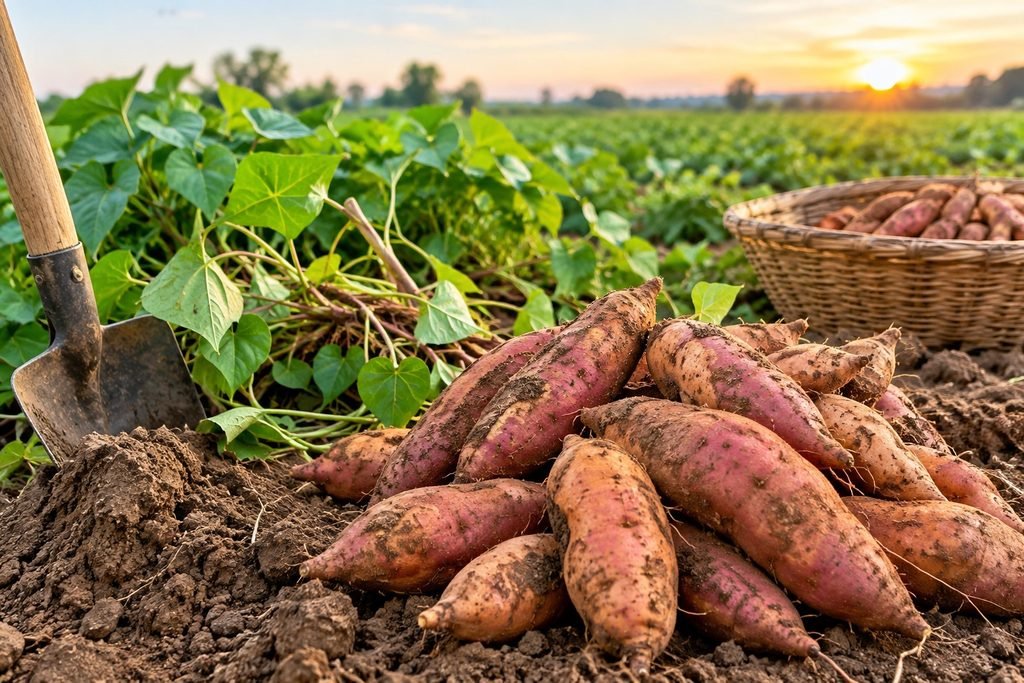
Instead, indoor growing gives you the ability to maintain suitable growing conditions and start new plants in succession.
For example:
Plant 1 → grow for approximately 3–4 months → harvest
Plant 2 → start several weeks later → harvest later
Plant 3 → start after Plant 2 → continue the cycle
By staggering your planting schedule and maintaining warmth and sufficient light, you can potentially create a more continuous supply instead of relying on one annual crop.
Common Mistakes When Growing Sweet Potatoes Indoors
Avoid these common problems:
Using a small pot: The roots need sufficient space to develop.
Poor drainage: Constantly wet soil can encourage root problems.
Not enough light: Weak indoor light can result in poor growth.
Too much nitrogen: Excess nitrogen can encourage vines rather than storage-root production.
Overwatering: Moist soil is good; constantly saturated soil is not.
Choosing a spreading variety: Long vines can become difficult to manage indoors.
Harvesting too early: Give the roots adequate time to develop.
Rough handling during harvest: Damaged roots are more vulnerable to deterioration.
Quick Indoor Sweet Potato Growing Guide
| Growing Requirement | Recommendation |
|---|---|
| Starting method | Slips |
| Container | Large, sturdy container with drainage |
| Soil | Loose, fertile and well-draining |
| Light | Bright direct sunlight or suitable grow light |
| Temperature | Warm conditions |
| Water | Consistent moisture without waterlogging |
| Variety | Compact/bush types are useful for containers |
| Time to harvest | Approximately 90–120 days |
| Harvest | Carefully dig storage roots |
| After harvest | Cure before long-term storage |
Final Thoughts
Growing sweet potatoes indoors is a fun way to produce food when you don’t have a traditional garden. The key is to remember that sweet potatoes are warm-season, long-season plants, so successful indoor growing depends on providing enough light, warmth, root space, and good drainage.
Start with healthy slips, use a large container, choose a loose growing medium, and give the vines plenty of room. If natural sunlight isn’t strong enough, a grow light can help maintain consistent growth.
For a more continuous supply, stagger new plants instead of relying on a single container. With patience and the right setup, you can enjoy homegrown sweet potatoes even when outdoor growing conditions aren’t ideal.
Frequently Asked Questions
Common questions about growing sweet potatoes indoors, all year round.
Yes. Sweet potatoes adapt well to indoor growing. You can sprout slips in water on a sunny windowsill and then grow them in large containers, or simply enjoy the vines as decorative houseplants while harvesting tubers from deeper pots.
Suspend half of an organic sweet potato in a jar of water using toothpicks, with the pointed end down. Keep it in a warm, bright spot and change the water weekly. Sprouts (slips) appear in 2-4 weeks, and you can twist them off once they’re 4-6 inches long.
Choose a deep container, ideally 12-16 inches deep and at least 5 gallons, with good drainage holes. Depth matters most because tubers develop downward, and cramped roots produce small or misshapen sweet potatoes.
Aim for at least 6-8 hours of bright light daily. A south-facing window works well, but during darker months a full-spectrum grow light placed above the plant helps keep the vines growing and tubers developing.
Keep the soil lightly moist but never soggy. Water when the top inch feels dry, and ease off as harvest nears. Overwatering is the most common cause of rot in container-grown sweet potatoes.
Most varieties need about 90-120 days from planting slips. When the lower leaves start yellowing, it’s usually a sign the tubers are ready — gently dig around the roots to check size before harvesting.
Yes — the young leaves and shoots are edible and nutritious, and are commonly cooked like spinach in many cuisines. Harvest lightly so you don’t stress the plant while it’s still building tubers.
Curing improves flavor and storage life. Keep the freshly dug tubers in a warm, humid spot (around 80-85°F) for 5-7 days, then store them in a cool, dry place. Skipping this step leaves them starchy and less sweet.