Best Environment to Grow Basil in Pots: 7 Secrets for Lush, Bushy Basil
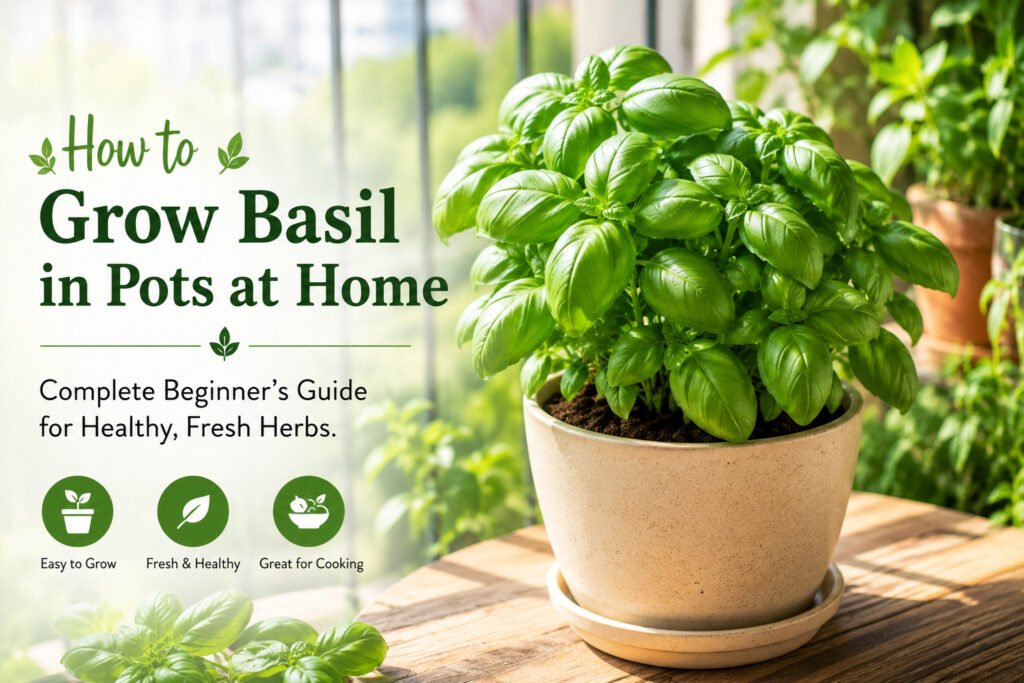
Basil is one of the easiest herbs to grow in containers, making it perfect for balconies, patios, windowsills, and small home gardens. However, choosing the right environment is important if you want a healthy, leafy, and bushy basil plant.
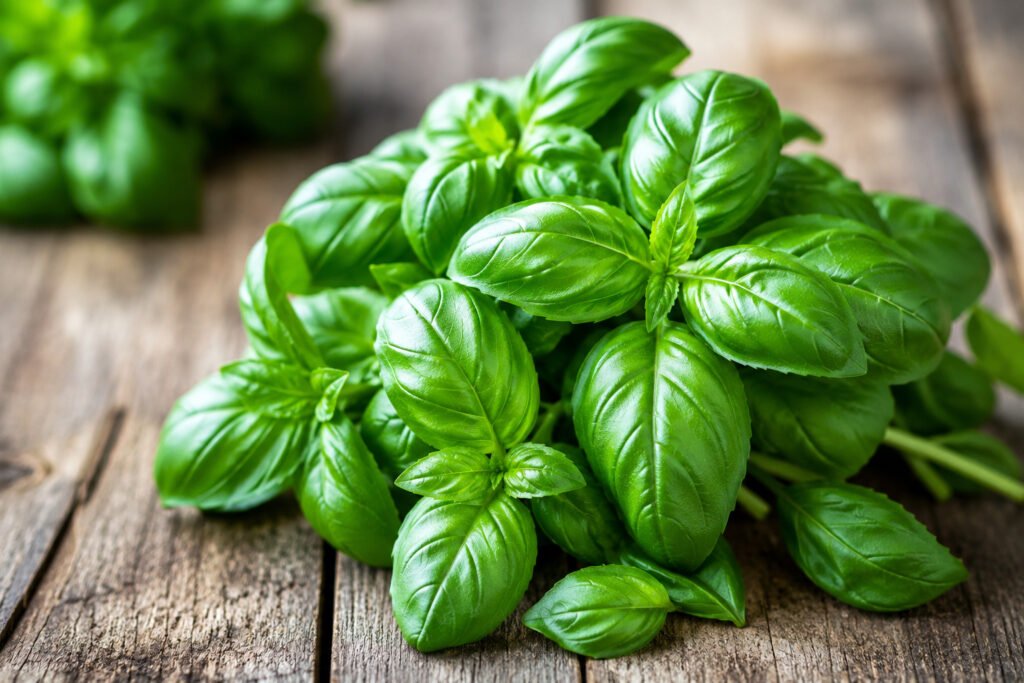
The best environment to grow basil in pots is warm, sunny, well-drained, and protected from extreme weather. Basil generally performs best with around 6–8 hours of bright sunlight, fertile soil, regular watering, good airflow, and enough space for its roots to grow.
In this guide, you’ll learn how to grow basil in pots, what type of basil pot to choose, how much sunlight and water basil needs, and how to encourage a bushier plant.
How to Grow Basil in Pots: Start With the Right Location
The location of your basil pot can make a big difference in plant growth.
Basil loves sunlight and warmth. Choose a place where your plant can receive approximately 6–8 hours of bright sunlight each day. A sunny balcony, patio, terrace, or south-facing window can work well.
When growing basil on a balcony, make sure the pot also has good airflow. However, avoid locations exposed to very strong winds because they can dry the plant quickly or knock over the container.
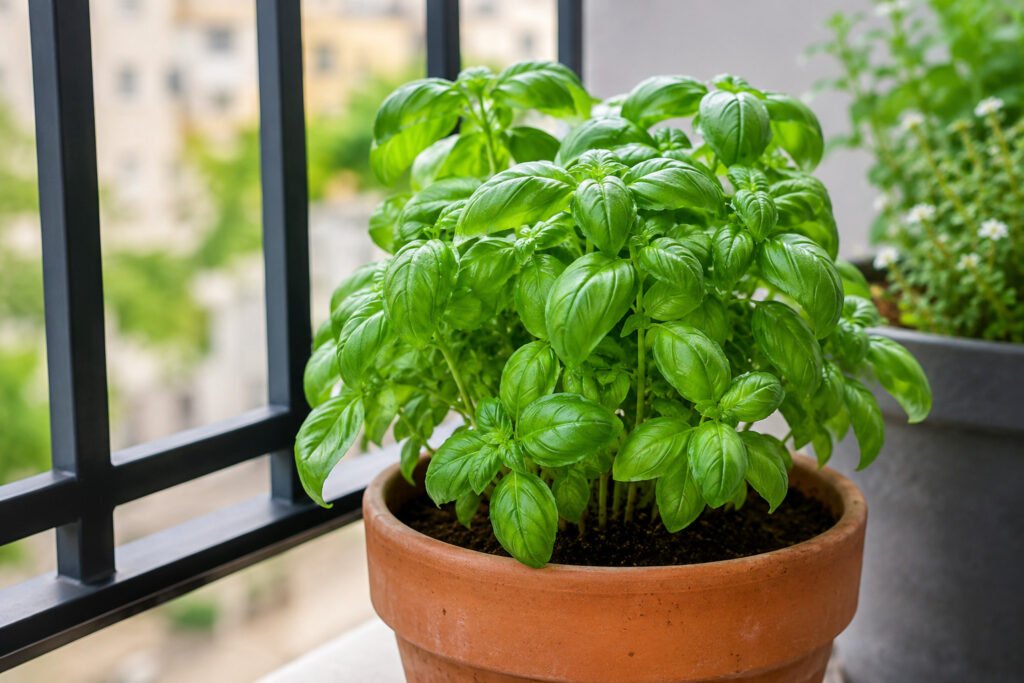
A major advantage of growing basil in a pot is that you can move the plant when conditions become too hot, cold, or windy.
Planting Basil in Pots: Choose the Right Container
Choosing the right pot is an important part of planting basil in pots.
For a mature basil plant, a pot around 8–12 inches wide and deep is a good practical choice. Smaller pots can work for young plants, but basil eventually needs enough root space to grow properly.
Most importantly, your pot for basil plant must have drainage holes at the bottom. Without proper drainage, excess water can remain around the roots and cause root problems.
If you’re growing several basil plants, avoid overcrowding them. Giving each plant enough space improves airflow and makes watering and harvesting easier.
What Is the Best Pot for Basil Plant?
Basil can grow successfully in several types of containers, including plastic, terracotta, and glazed ceramic pots.
Terracotta pots are porous and allow moisture to evaporate more quickly, which can be useful if you tend to overwater.
Plastic pots retain moisture for longer and are lightweight, making them convenient for balconies.
Glazed ceramic pots can also work well, provided they have adequate drainage holes.
The most important factors are not the material or appearance of the pot but proper drainage, sufficient root space, and suitable growing conditions.
What Is the Best Soil for Basil in Pots?
Basil grows best in fertile, well-draining soil that holds enough moisture without becoming waterlogged.
Avoid using heavy garden soil alone in containers because it can become compacted and restrict drainage. Instead, use a quality potting mix or a light homemade mixture.
A simple mixture can include:
- 40% quality potting or garden soil
- 30% compost
- 20% coarse sand or perlite
- 10% cocopeat, if needed
Basil generally performs well in soil with a pH of approximately 6.0–7.5.
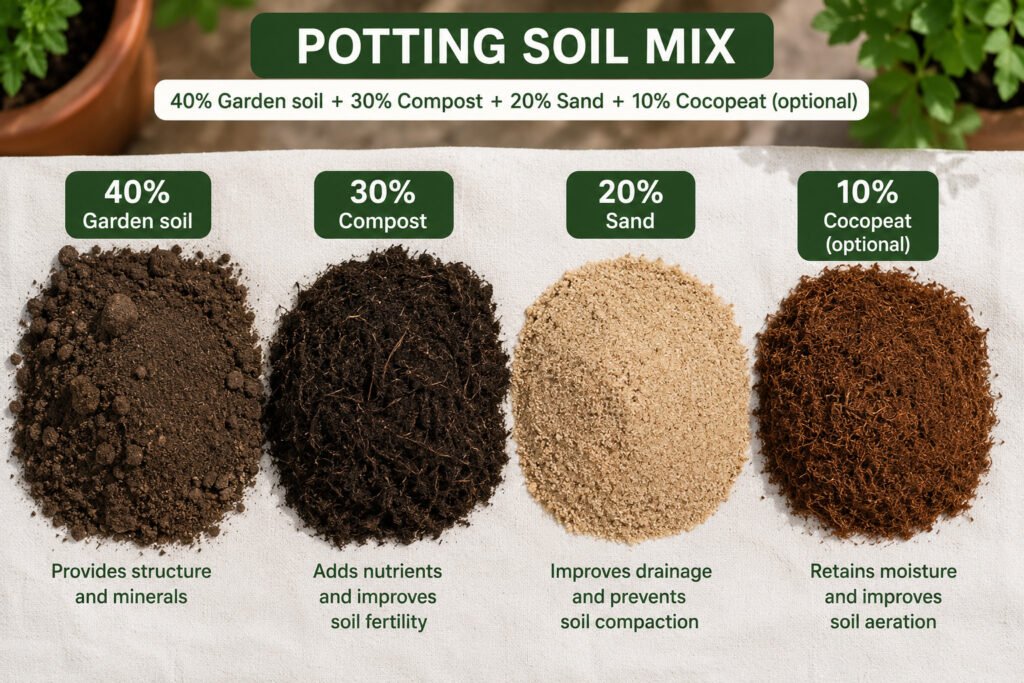
Good soil provides the roots with air, moisture, and nutrients while allowing excess water to drain away.
Basil Pot: How Much Space Does One Plant Need?
Basil can become surprisingly large when growing conditions are good. Crowding too many plants into one small basil pot can reduce airflow and increase competition for water and nutrients.
For beginners, growing one or two basil plants in a suitably sized container is often easier than planting many seedlings together.
If you notice leaves touching neighboring plants constantly or the soil remaining wet for too long, consider giving your basil more space.
Basil Plant Balcony: Is a Balcony a Good Place to Grow Basil?
Yes! A balcony can be an excellent location for growing basil.
A basil plant balcony setup should provide:
- 6–8 hours of sunlight
- Good air circulation
- Protection from strong winds
- Easy access to water
- A stable pot that will not easily tip over
- Protection from extreme heat or cold
If your balcony receives strong afternoon heat, watch the plant carefully. Container soil can dry out faster than garden soil, so you may need to check moisture more frequently.
How Often Should You Water Basil in Pots?
There is no single watering schedule that works for every basil pot. Temperature, sunlight, pot size, soil type, and weather all affect how quickly the soil dries.
Instead of watering according to a fixed schedule, check the soil regularly.
Push your finger about 1–2 inches into the soil. If the upper layer feels dry, water the plant thoroughly until some water begins draining from the bottom of the pot.
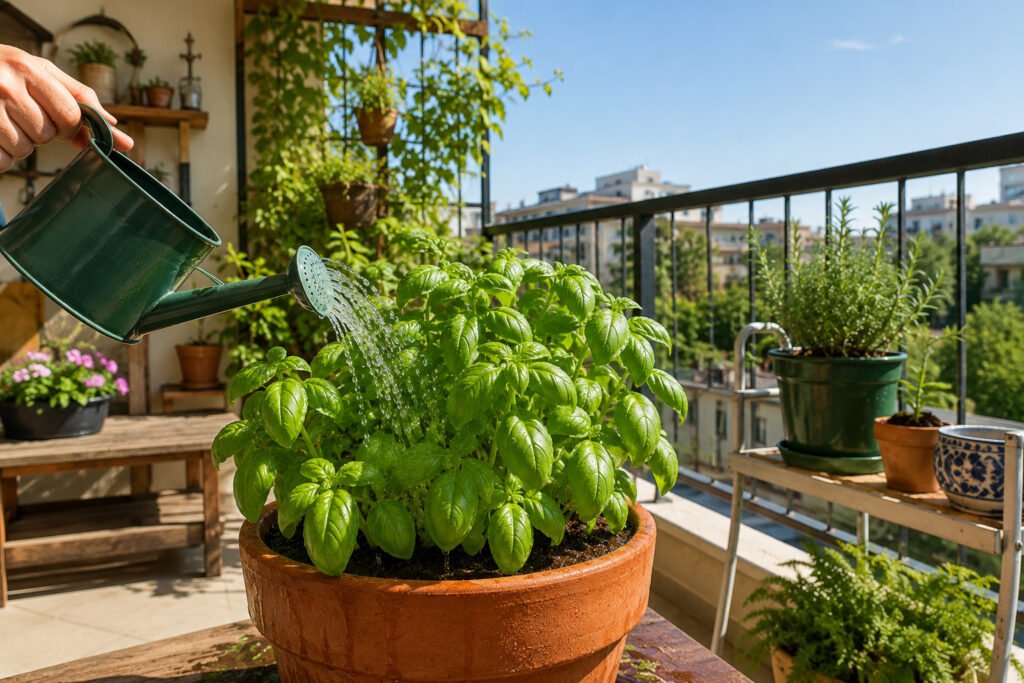
Avoid keeping basil constantly soaked. At the same time, don’t allow the plant to remain severely dry for long periods.
During hot weather, container basil may need more frequent watering because pots lose moisture faster than plants growing in the ground.
What Temperature Is Best for Basil?
Basil is a warm-season herb and does not tolerate cold temperatures well.
Keep basil away from frost and very cold conditions. If you are moving a basil plant outdoors, wait until temperatures are consistently warm.
Cold weather can cause slow growth, leaf damage, or even kill the plant.
For balcony gardeners, pay particular attention to nighttime temperatures during cooler seasons.
Does Basil Need Fertilizer?
Basil needs nutrients for healthy leaf production, but more fertilizer does not necessarily mean better growth.
If your basil is growing slowly or the leaves appear pale, a suitable liquid fertilizer can be applied according to the product instructions. Container-grown herbs may need occasional feeding because nutrients are gradually removed when you water the pot.
Avoid excessive fertilizer because too much can encourage weak growth and may affect the plant’s natural aroma and flavor.
Using good-quality compost in your potting mix can also help provide nutrients and improve soil quality.
How to Make Basil Grow Bushier
If you want a lush, bushy basil plant, regular pruning is one of the most useful techniques.
Once the plant has several sets of leaves, pinch or cut the growing tip just above a pair of leaves. This encourages the plant to produce additional branches instead of growing as one tall stem.
Continue harvesting the growing tips regularly as the plant develops.
If your main goal is to produce lots of leaves, remove flower buds when they appear. Once basil begins flowering heavily, leaf production can decrease and the foliage may become more bitter.
Regular harvesting is therefore not only useful for your kitchen—it can also help maintain a productive, bushy plant.
Common Mistakes When Growing Basil in Pots
Avoid these common problems when growing basil:
1. Using a pot without drainage holes
Excess water can remain around the roots.
2. Using heavy garden soil alone
Compacted soil can reduce drainage and airflow around the roots.
3. Giving too little sunlight
Basil needs plenty of light for strong, healthy growth.
4. Overwatering
Constantly wet soil can damage the roots.
5. Letting the plant become severely dry
Basil can wilt quickly when container soil becomes too dry.
6. Overcrowding the pot
Too many plants can reduce airflow and increase competition.
7. Allowing basil to flower continuously
Heavy flowering can reduce leaf production.
8. Overfertilizing
Too much fertilizer can produce excessive growth without necessarily improving flavor.
Quick Basil Growing Guide
| Growing Factor | Ideal Condition |
|---|---|
| Sunlight | About 6–8 hours |
| Pot size | Around 8–12 inches for a mature plant |
| Drainage | Essential |
| Soil | Fertile and well-draining |
| Soil pH | About 6.0–7.5 |
| Watering | Keep soil consistently moist, not soggy |
| Temperature | Warm conditions |
| Fertilizer | Moderate feeding when needed |
| Pruning | Regular pinching |
| Airflow | Good circulation |
Final Verdict: What Is the Best Environment to Grow Basil in Pots?
The best environment to grow basil in pots is warm, sunny, well-drained, and protected from extreme conditions.
Give your basil approximately 6–8 hours of sunlight, plant it in a fertile and well-draining potting mix, choose a pot with proper drainage holes, and keep the soil consistently moist without making it waterlogged.
For the healthiest and bushiest basil, remember one simple rule: give it plenty of light, enough root space, proper drainage, and regular harvesting.
With the right environment, even a small balcony or windowsill can produce a steady supply of fresh basil for your kitchen.You can learn more growing basil in pot from the homesteadandchill.com