
5 Best NASA Recommended Plants for Better Indoor Air Quality
Indoor air can contain pollutants released by furniture, paints, cleaning products, adhesives, and other household materials. Fortunately, some houseplants have demonstrated an ability to remove certain volatile organic compounds (VOCs) from indoor air under controlled conditions.
The five best-known NASA-tested plants for indoor air quality are the snake plant, peace lily, spider plant, golden pothos, and bamboo palm. These plants were among the houseplants studied in NASA research investigating whether plants could help remove chemicals such as formaldehyde, benzene, and trichloroethylene from enclosed environments.
However, there is an important distinction: NASA did not certify these plants as household air purifiers. The original experiments were conducted under controlled conditions, so houseplants should complement—not replace—good ventilation, source control, and appropriate air filtration.
What Did NASA Discover About Indoor Plants?
NASA became interested in plants as a potential part of life-support systems for enclosed environments, including future space habitats. Researchers investigated whether common foliage plants could help remove pollutants from indoor air.
The landmark NASA study published in 1989 examined plants and their ability to remove several volatile organic compounds, particularly benzene, formaldehyde, and trichloroethylene. The research also highlighted the role of plant roots, soil, and microorganisms in pollutant removal.
That research is why certain houseplants are commonly described as NASA clean air plants or NASA-tested air-purifying plants.
Here are five excellent choices for adding greenery while potentially supporting a healthier indoor environment.
1. Snake Plant
Botanical name: Dracaena trifasciata
Also known as: Mother-in-law’s tongue
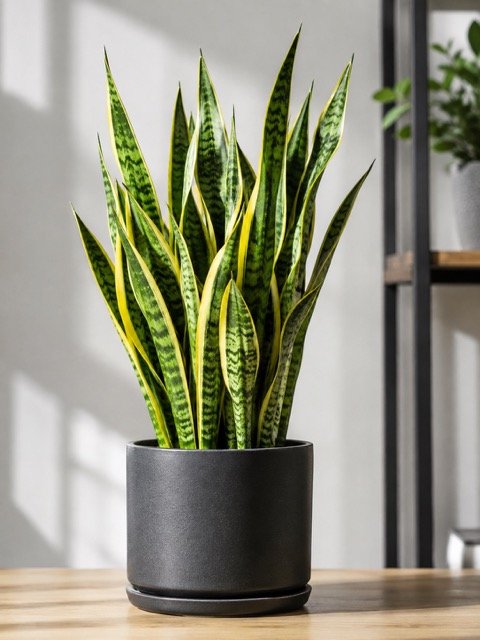
The snake plant is one of the most popular air-purifying indoor plants because it combines attractive foliage with extremely easy care.
Its tall, upright leaves make it particularly suitable for bedrooms, offices, hallways, and small apartments. It tolerates lower-light conditions and generally prefers its soil to dry between waterings.
NASA’s research included snake plants in investigations of indoor pollutants such as formaldehyde, benzene, and trichloroethylene.
Why choose it?
- Excellent low-maintenance houseplant
- Tolerates lower light
- Requires relatively little water
- Attractive upright growth
- Suitable for beginners
Care tip: Avoid overwatering. Allow the potting mix to dry before watering again.
2. Peace Lily
Botanical name: Spathiphyllum
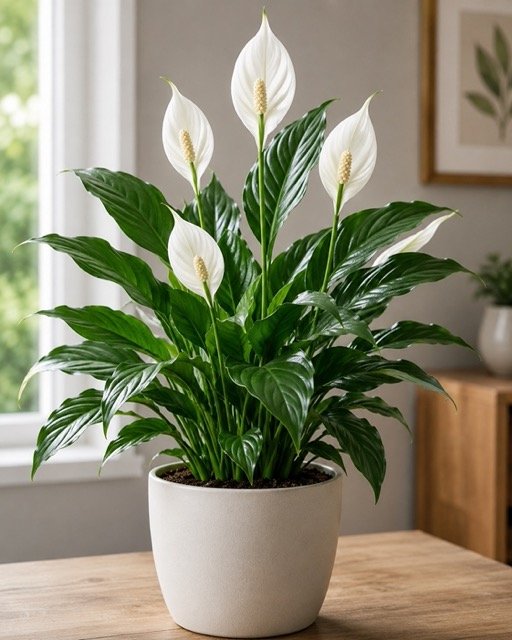
If you want a plant with attractive foliage and elegant white flowers, the peace lily is an excellent option.
Peace lilies were among the plants investigated in NASA’s indoor air pollution research. They demonstrated the ability to remove several tested pollutants in controlled environments.
The plant prefers bright, indirect light but can tolerate lower-light locations. It also appreciates consistently moist—but not waterlogged—soil.
Why choose it?
- Beautiful white flowers
- Excellent decorative houseplant
- Performs well in indirect light
- Frequently included among NASA-tested air-purifying plants
Care tip: If the leaves begin to droop, the plant may be signaling that it needs water. Keep the soil lightly moist while avoiding standing water.
Important: Peace lilies are toxic if chewed by cats, dogs, or other pets, so place them where animals cannot access them.
3. Spider Plant
Botanical name: Chlorophytum comosum
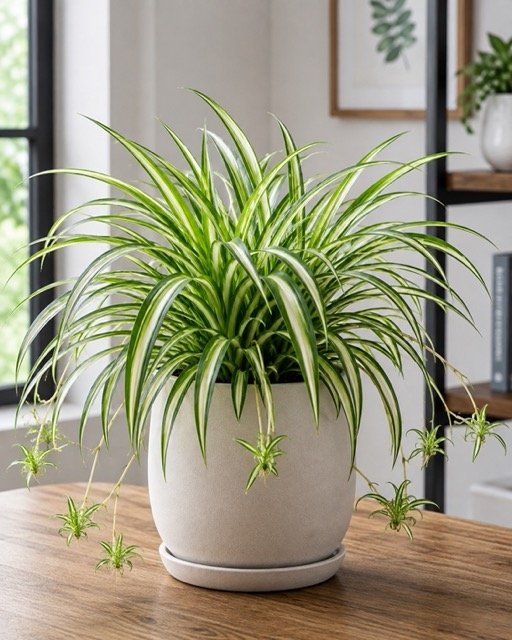
The spider plant is one of the easiest indoor plants for clean air, making it particularly suitable for beginners.
Its long, arching leaves give it a distinctive appearance, and mature plants often produce small plantlets—or “spiderettes”—that can be propagated into new plants.
Spider plant was included in NASA-related research on removing indoor pollutants, including formaldehyde.
Why choose it?
- Beginner-friendly
- Fast-growing under suitable conditions
- Easy to propagate
- Attractive hanging-basket plant
- Adaptable to indoor environments
Care tip: Give it bright, indirect light and water when the upper layer of soil begins to dry.
4. Golden Pothos
Botanical name: Epipremnum aureum
Also known as: Devil’s ivy
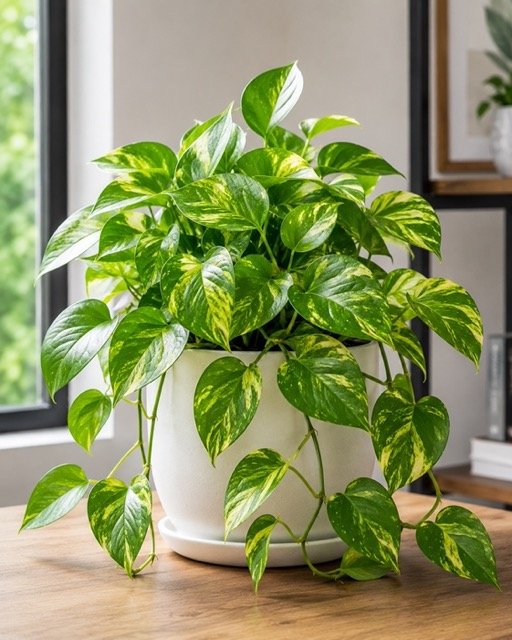
Golden pothos is another excellent choice if you want an attractive, fast-growing houseplant that requires relatively little maintenance.
Its trailing vines make it perfect for shelves, hanging baskets, and tall plant stands. The green leaves decorated with golden-yellow patterns can add a natural appearance to almost any room.
Pothos was among the plants evaluated in NASA’s indoor air pollution research, including testing involving formaldehyde and benzene.
Why choose it?
- Very easy to grow
- Tolerates a range of indoor light conditions
- Fast-growing trailing habit
- Excellent for shelves and hanging baskets
- Attractive variegated foliage
Care tip: Avoid keeping pothos in completely dark conditions. Bright, indirect light generally helps maintain stronger growth and attractive leaf coloration.
Like peace lily, pothos can be harmful if ingested by pets.
5. Bamboo Palm
Botanical name: Chamaedorea seifrizii
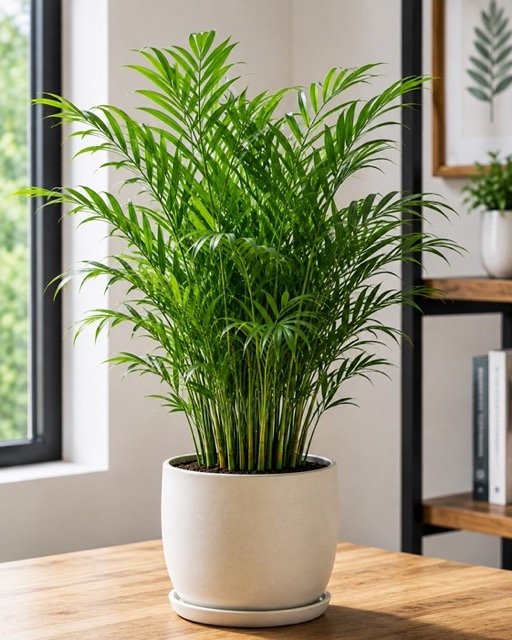
The bamboo palm is a great choice if you want a larger indoor plant with a tropical appearance.
NASA research investigated bamboo palm among other foliage plants for its ability to remove indoor pollutants.
Because of its size and dense foliage, bamboo palm can also make an impressive decorative feature in living rooms, offices, and other spacious indoor areas.
Why choose it?
- Attractive tropical appearance
- Larger plant for spacious rooms
- Performs well in bright, indirect light
- Included in NASA’s indoor air-pollution research
Care tip: Keep the soil moderately moist and provide bright, filtered or indirect light. Avoid prolonged exposure to harsh direct sunlight.
Do Indoor Plants Really Clean the Air?
This is where the NASA study is often misunderstood.
NASA’s experiments showed that plants can remove certain VOCs under controlled, enclosed conditions. Researchers also found that the roots, soil, and associated microorganisms played an important role in the pollutant-removal process.
But a normal home is very different from a sealed laboratory chamber. Modern evidence suggests that the air-cleaning effect of ordinary houseplants in a typical room is much smaller than the popular “one plant cleans an entire room” claim.
Therefore, don’t rely on plants alone to solve indoor air pollution.
For better indoor air quality, combine houseplants with:
- Regular ventilation
- A good-quality air purifier when appropriate
- Reducing indoor smoke and pollutants
- Controlling dust and mold
- Maintaining clean HVAC filters
- Choosing low-VOC paints and household products
How Many Plants Do You Need?
There is no reliable universal number of plants that will guarantee clean air in a particular room.
The original NASA research was performed under controlled conditions rather than as a prescription for how many plants should be placed in an ordinary home.
Instead of filling your home with dozens of plants solely for air purification, choose several healthy plants that suit your space and care routine.
Final Thoughts
The snake plant, peace lily, spider plant, golden pothos, and bamboo palm are among the best-known NASA-tested houseplants associated with indoor air-pollution research.
They can bring greenery, natural beauty, and a more pleasant indoor environment to your home. Most importantly, NASA’s research provides an interesting scientific foundation for understanding how plants, roots, soil, and microorganisms interact with certain indoor pollutants.
For the healthiest home, however, think of plants as one part of an indoor air-quality strategy—not a replacement for ventilation or proper air filtration.
If you’re looking for an easy starting point, choose a snake plant for low maintenance, a spider plant for beginners, a pothos for fast-growing greenery, a peace lily for flowers, or a bamboo palm for a larger tropical display.
Quick Answer: Best NASA-Tested Plants for Indoor Air Quality
| Plant | Best For | Care Level |
|---|---|---|
| Snake Plant | Low-maintenance homes | Very Easy |
| Peace Lily | Flowers + greenery | Easy |
| Spider Plant | Beginners | Very Easy |
| Golden Pothos | Fast-growing vines | Very Easy |
| Bamboo Palm | Large tropical displays | Moderate |
Bottom line: NASA research found that certain houseplants can remove specific pollutants from enclosed air under controlled conditions. These five plants are excellent choices for bringing more greenery indoors, but proper ventilation and air filtration remain more important for maintaining genuinely good indoor air quality.